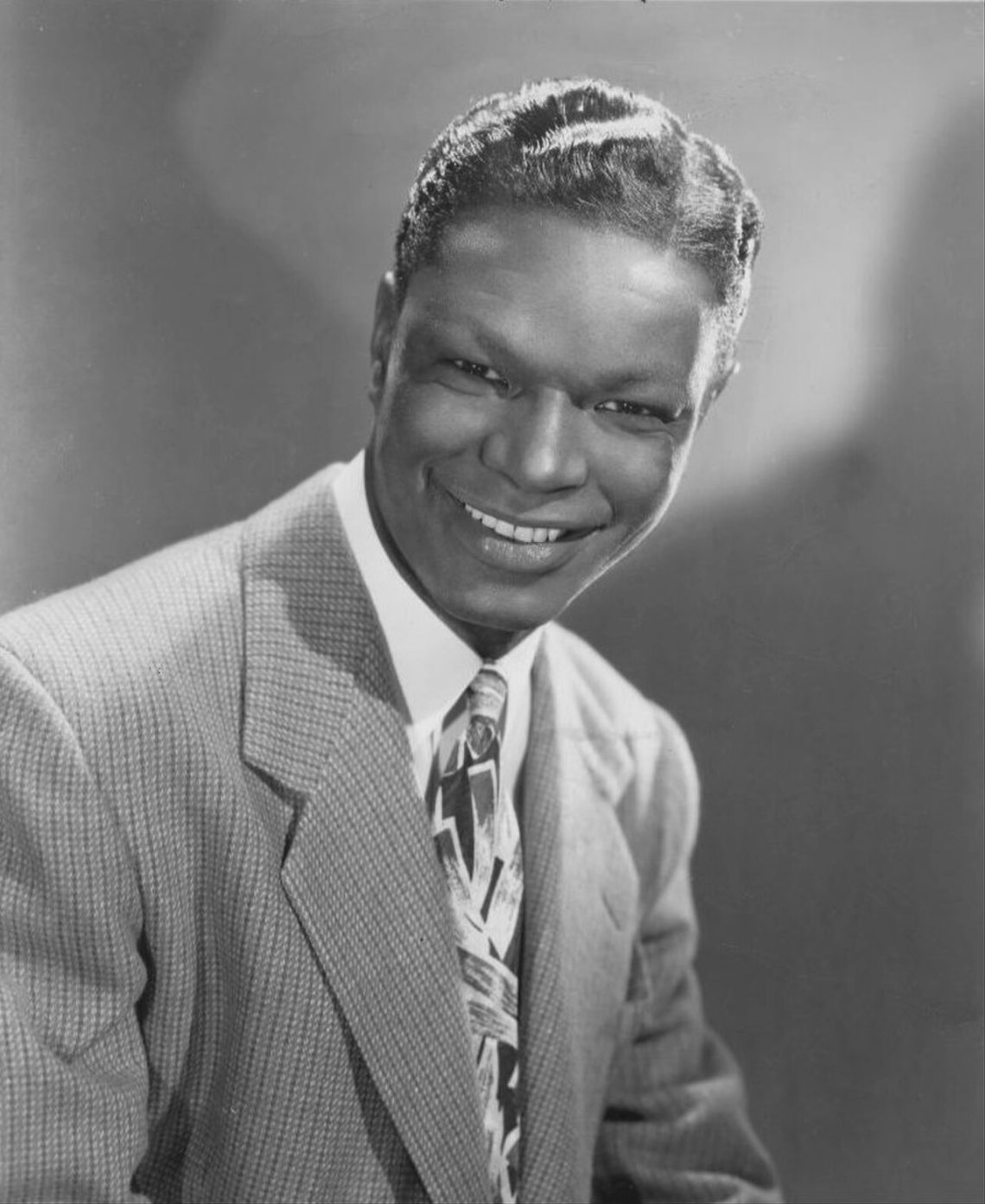
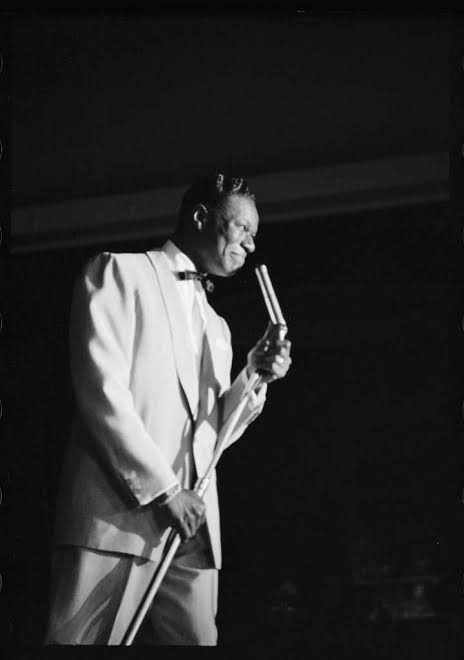
On the evening of April 10, 1956, Nat King Cole, a native of Alabama, was scheduled to perform two shows at the Birmingham Municipal Auditorium. During the Jim Crow era, audiences, especially in the South, were segregated. That night, Cole would entertain the White audience during the early show, followed by a performance for the Black audience later that evening.
As an African American entertainer, Nat King Cole was widely regarded as one of the most accomplished singer-musicians in the world. His recordings achieved immense commercial success, selling millions of copies and featuring enduringly popular songs such as “Unforgettable,” “Mona Lisa,” “Stardust,” “When I Fall in Love,” and many others.
The Attack
Playing the piano and singing, over 4,000 white attendees enthusiastically applauded as the singer began his performance. Not long into the show, however, a man seated near the front began heckling Cole, repeatedly uttering racial slurs. Despite the taunting, the entertainer remained unfazed and continued his performance.
As he began his third song, “Little Girl,” three white men abruptly stormed the stage and violently knocked Nat King Cole off the piano bench, hitting the floor hard. His microphone landed off the stage.
The assailants were swiftly apprehended, along with three other accomplices. The leaders were identified as members of the Ku Klux Klan. Their vehicle was found to contain rifles, a blackjack, and brass knuckles. They were all arrested, jailed, and within a couple of days charged with intent to murder.
Audience
After police removed the offenders, the visibly shaken star returned to the stage, thanked the audience for coming, and apologized for needing to go to the hospital. Later, his attending physician, Dr. James Scott, said that Cole had sustained injuries to his back, left arm, and right leg, and that he recommended that the entertainer rest for a few days.
Addressing the audience, Cole said, “I just came here to entertain you. That is what I thought you wanted. I was born in Alabama. Those folks hurt my back. I can not continue because I need to go to the hospital.” He then left the stage. The auditorium erupted in loud applause; the white audience gave him a prolonged standing ovation.
The Billboard editorial denounced the attack, saying it “shocks decent people throughout the land.”
Enraged, the Birmingham Post-Herald said, “should give the world notice that Birmingham does not tolerate that kind of despicable business.”
Ralph McGill (Editor of the Atlanta Constitution), a prominent white Southern journalist and opponent of segregationist violence, condemned the attack in his syndicated column. He wrote that the men who attacked Cole were “poor, misguided creatures” representing the “worst impulses of the South,” adding that the assault was “a disgrace to decent Southerners.”
Public Response
The event stunned the American public. The attack on Nat King Cole underscored a wider reality of Jim Crow America. Despite his extraordinary success, Black citizens were still denied equal rights, dignity, and even the assurance of personal safety. The nation’s most prominent Black celebrities were still vulnerable to discrimination and racial violence.
If someone as famous and beloved as Nat King Cole could be attacked on stage, what did that say about the experience of ordinary Black Americans? By the late 1950s, a growing number of white Americans were beginning to challenge segregation openly, while others continued to support it as a fact of life.
The once solid institution of Jim Crow was starting to show cracks in its foundation, and incidents such as the attack on Nat King Cole exposed the contradictions of a system increasingly at odds with the country’s democratic roots and ideology.
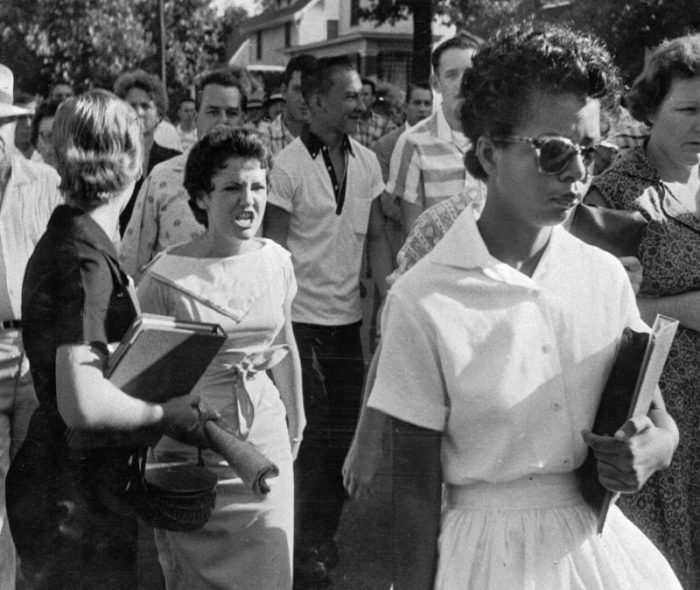
A System of Injustice
Black America faced enormous challenges of injustice long before Nat King Cole walked onto the stage in Birmingham. Across much of the South, segregation ruled daily life. The general standard in nearly all hotels, restaurants, theaters, schools, waiting rooms, transportation hubs, and other public facilities was to exclude Black patrons or require separate facilities.
Jim Crow created what many Southern Black Americans described as two separate and distinct Americas. Its laws were intentionally designed to limit opportunities in education, healthcare, housing, employment, and more. The laws of Jim Crow were especially strong and creative when it came to limiting the voting rights of Black citizens.
Although rooted in deep racial hatred, Nat King Cole’s assault was, however, far from unique. Throughout the Jim Crow era, Black entertainers routinely faced a level of danger that few white performers could imagine.
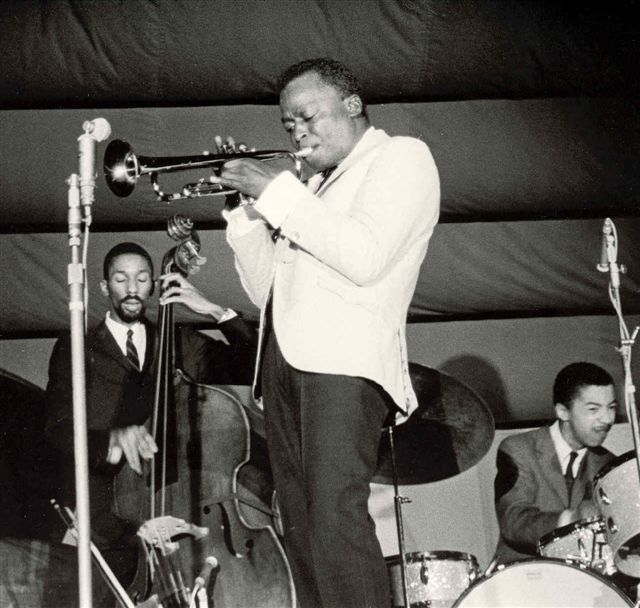 Miles Davis, July 23, 1963. In the Public Domain.
Miles Davis – 1959
In 1959, jazz legend Miles Davis was outside New York’s BirdLand nightclub, where he was appearing, when a white police officer ordered him to move on. After Davis explained that he was a musician and performing at the club, a detective struck him in the head with a blackjack, leaving him bloodied and requiring medical treatment. Like Nat King Cole, even one of the world’s most respected musicians could be treated as a criminal in his own workplace.
For many entertainers, danger increased when they reached the Southern states. In the late 1950s, members of the doo-wop group The Flamingos described being led to the stage in Birmingham, Alabama, by dozens of armed police—some with rifles and others with batons. Before the show, the officers threatened the group with physical violence if they even looked at white women in the crowd. “I don’t want to see any of you blacks looking at the white women out there. If you do, your ass is mine.”
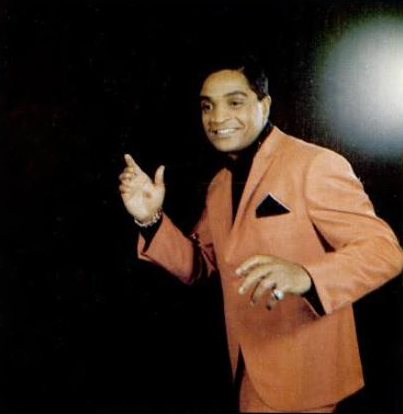
Jackie Wilson – February 5, 1960
On February 5, 1960, Jackie Wilson brought his show of rhythm and blues to Little Rock’s Robinson Auditorium. The city remained scarred by the violent racial issues over school desegregation that had thrust Little Rock into the national spotlight only three years earlier. Race was a dark cloud that hung over nearly every public event.
Among the performers sharing the bill with Wilson was the gifted singer-songwriter Jesse Belvin. The twenty-seven-year-old Belvin had already produced classics such as “Goodnight My Love” and the 1950s hit “Earth Angel.” He was clearly on his way to being a major star.
Originally, the show was to be performed for segregated audiences, but Jackie Wilson and his entourage refused to appear unless the city agreed to one integrated show. The city of Little Rock was anxious because this would be the first concert ever played before an integrated audience. Unfortunately, the show experienced repeated loud interruptions from white segregationists and had to be stopped twice. They were shouting racial slurs and urging the white teenagers to leave the auditorium.
Controversial Accounts of the Evening
By many accounts, including Jackie Wilson’s, the atmosphere in the auditorium was tense. Death threats and racial disruptions were a real concern for the performers’ safety. Several other accounts went even further, claiming that armed white men pursued members of the touring party after the show, and several individuals stated that the tires on the entertainers’ vehicles were either slashed or tampered with. Newspaper coverage at the time, however, did not report a riot, a pursuit, or any major disturbances.
The Death of Jesse Belvin
What is beyond dispute, however, is the tragedy that followed. In the early morning hours after the concert, Jesse Belvin, his wife Jo Ann Belvin, and their driver, as well as a couple in the other car from Milwaukee, were killed in an automobile crash near Hope, Arkansas. It was widely reported that Belvin had received as many as six death threats before the concert in Little Rock, even prompting him to call his mother twice during this time to express his concern.
Almost immediately, rumors spread that the car’s tires had been deliberately tampered with before leaving Little Rock. That suspicion is a matter of record; one account states that an Arkansas state trooper believed the tires had “obviously been tampered with.” Whether sabotage actually occurred, however, has never been conclusively established.
The result is an undocumented story that continues to increase the mystery of that evening. The memory of the concert itself survives as a reminder of the uncertainty and potential danger that surrounded Black entertainers during the Jim Crow era.
Smokey Robinson and the Miracles
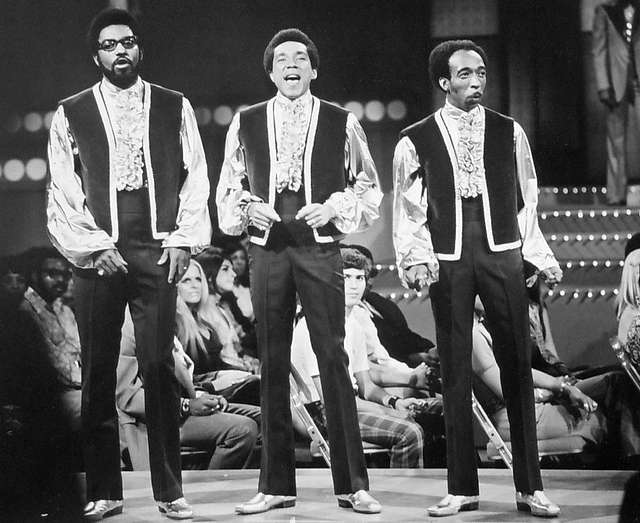
Other Motown artists endured similar dangers. While touring through the Deep South, Smokey Robinson and the Miracles encountered a gas station attendant who brandished a shotgun and opened fire after they attempted to use a whites-only restroom. On another occasion, gunfire was reportedly directed at their vehicle after a concert. Members of The Contours experienced similar hostility.
During Motown’s Motor City Revue tours, their bus was repeatedly shot at, and they were threatened at gunpoint for attempting to use public facilities that white Southerners considered off limits.
The Ever-Present Danger of Jim Crow America
Taken together, these experiences reveal the broader truth behind the attack on Nat King Cole. Jim Crow was not merely a collection of discriminatory laws. It was a deeply embedded social and legal system designed to uphold racial inequality and restrict Black Americans’ access to the rights, opportunities, and everyday freedoms enjoyed by most white citizens.
If Nat King Cole, one of the most admired performers in America, could be assaulted on stage, ordinary Black citizens were even more vulnerable. For many Black Americans, the lesson was unmistakable: the dangers created by Jim Crow were never far away.
Day-to-Day Hardship of Jim Crow
The most significant hardship, however, extended beyond the acts of violence. Law enforcement routinely detained Black musicians under dubious pretenses, levied arbitrary penalties, and enforced segregation through intimidation and force. Despite their prominence, performers were commonly denied service at hotels, restaurants, and roadside establishments.
Ensembles led by icons such as Duke Ellington and Count Basie often had to sleep on buses or in cars because of widespread hotel discrimination. Musicians carried canned provisions because dining venues refused them service. Many depended on the Negro Motorist Green Book to locate safe accommodations, dining options, and fuel sources.
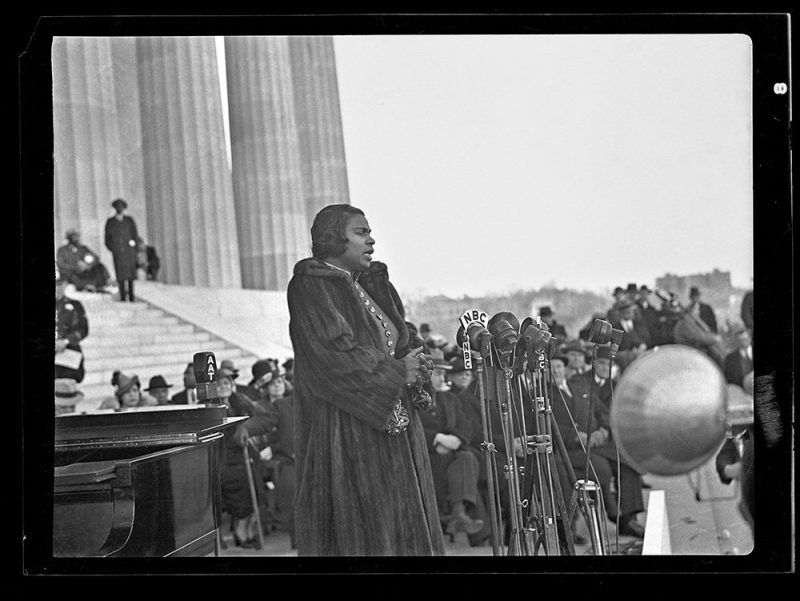
The experiences of other Black entertainers underscored the same reality that confronted Cole in Birmingham: talent and fame offered no immunity from discrimination. In 1939, the world-renowned contralto opera singer Marian Anderson was barred from performing by the Daughters of the American Revolution (DAR) at Washington’s Constitution Hall because of her race. With the help of Eleanor Roosevelt, the exclusion led to her historic Easter Sunday concert at the Lincoln Memorial before a crowd of 75,000 and millions more listening on their radios.
As Ms. Anderson commenced her performance of the patriotic anthem “America,” the lyrics “My country ‘tis of thee” prompted thousands to weep openly. Many observers regarded the Easter Sunday event as a pivotal moment in the African American struggle for civil rights.
Link to short video of Marian Anderson singing at the Lincoln Memorial, Washington, DC. April 6, 1939. https://archive.org/details/yt_xodhypFAFJw
Black Entertainers Transformed American Culture
Together, their stories reveal that the challenges Black entertainers faced extended far beyond the stage. Despite exclusion, humiliation, threats, and violence, Black entertainers transformed American culture. They filled concert halls, dominated record charts, influenced generations of artists, and forced the nation to confront contradictions between its democratic ideals and its racial realities.
They did not achieve these victories alone. Civil rights activists, both black and white, challenged discriminatory laws and customs. Allies such as Eleanor Roosevelt used their public influence to oppose injustice. Many white entertainers, promoters, journalists, celebrities, and citizens also rejected segregation and lent their voices to the cause of equality. Change came slowly, but it came because people of different backgrounds refused to accept the status quo.
Remembering Nat King Cole
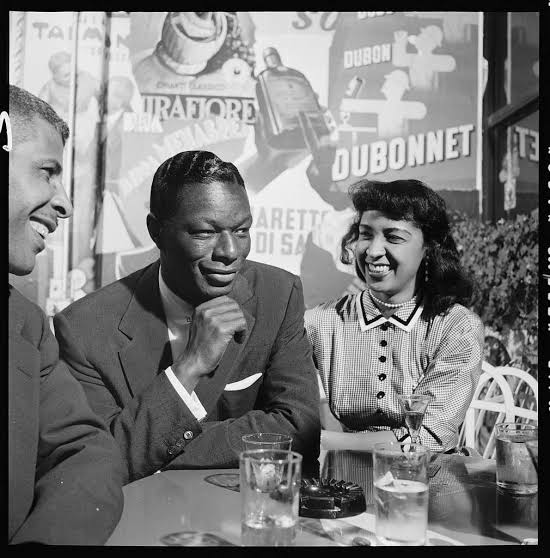
In the end, the men who rushed the stage in Birmingham are largely forgotten, but we do not forget Nat King Cole. The image that endures is not of a frightened performer lying on the auditorium floor, but of an artist who returned to the stage, faced the crowd, and carried on. His courage reflected the hardships endured by countless Black entertainers. In many ways, when Nat King Cole was knocked down and beaten and found the strength to get back up and confront the evil, he represented Black America and not just Black entertainers.
The barriers that confronted Nat King Cole, and others regardless of celebrity, were formidable, but their achievements proved stronger. Their triumphs helped pave the way for a more inclusive America, ensuring that the voices segregation sought to silence would ultimately be heard around the world.


